A Front Row To Life
In Italian culture, sitting is rarely an act of withdrawal. It is a deliberate posture of observation and engagement with the surrounding world. Within my Nonno’s garden, a cultivated plot where he has propagated the same heritage seeds across a lifetime to sustain family and friends, a single chair anchors the threshold between labour and contemplation. Set against the shifting light of the foliage, the seat offers a quiet vantage point. Here, he pauses to watch the slow progression of the garden, occupying a space designed not for haste, but for witnessing.
This typology of the observant seat is embedded in the architectural history of the Italian peninsula. Throughout the Renaissance, prominent families in Florence and Siena integrated stone benches, known as sedili or pancacce, directly into the rusticated masonry of their palazzo facades. Extending outward from the heavy stone base, these ledges softened the boundary between the private domestic interior and the civic theatre of the street, offering passersby a place to rest and converse. In the quiet enclosure of the garden, Nonno’s chair functions as an intimate, domestic sedile. It mediates between inward reflection and the seasonal rhythms of the soil, recalling the Stoic meditation of Marcus Aurelius: stepping back to observe the steady current of time. While the surrounding planting shifts with the cycle of germination, harvest, and dormancy, the seat remains fixed.
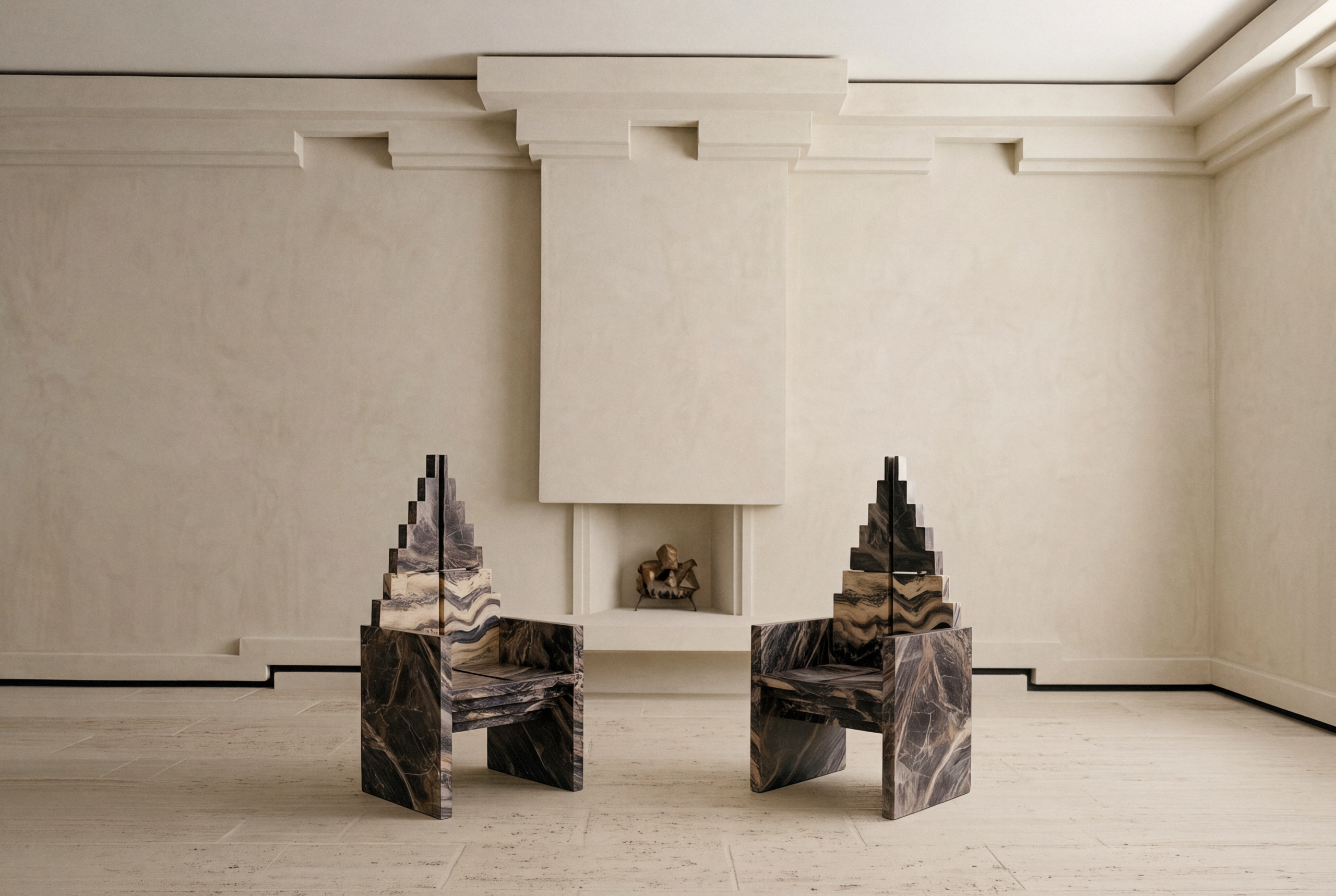
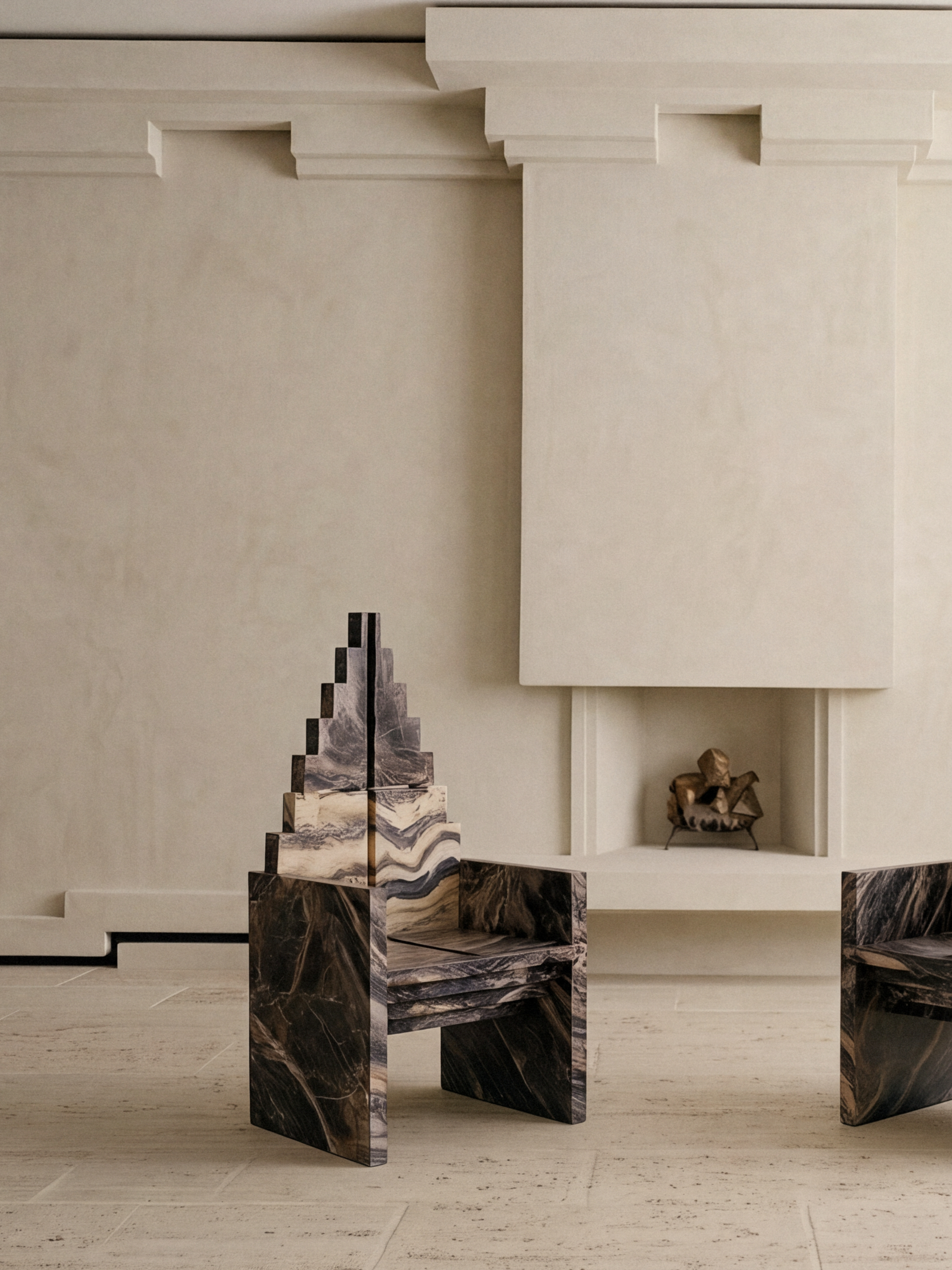
Translated into monolithic stone, the humble garden chair takes on a permanent, sculptural weight. Left unoccupied, the carved form registers the physical absence of my Nonno while holding the imprint of his daily ritual. Through the density and stillness of the material, a deeply personal object shifts into an open archetype. The stone surface invites the viewer to project the memory of their own elders onto its form, or to take a seat, settle into the stillness of the landscape, and participate in the ancient habit of watching life unfold.