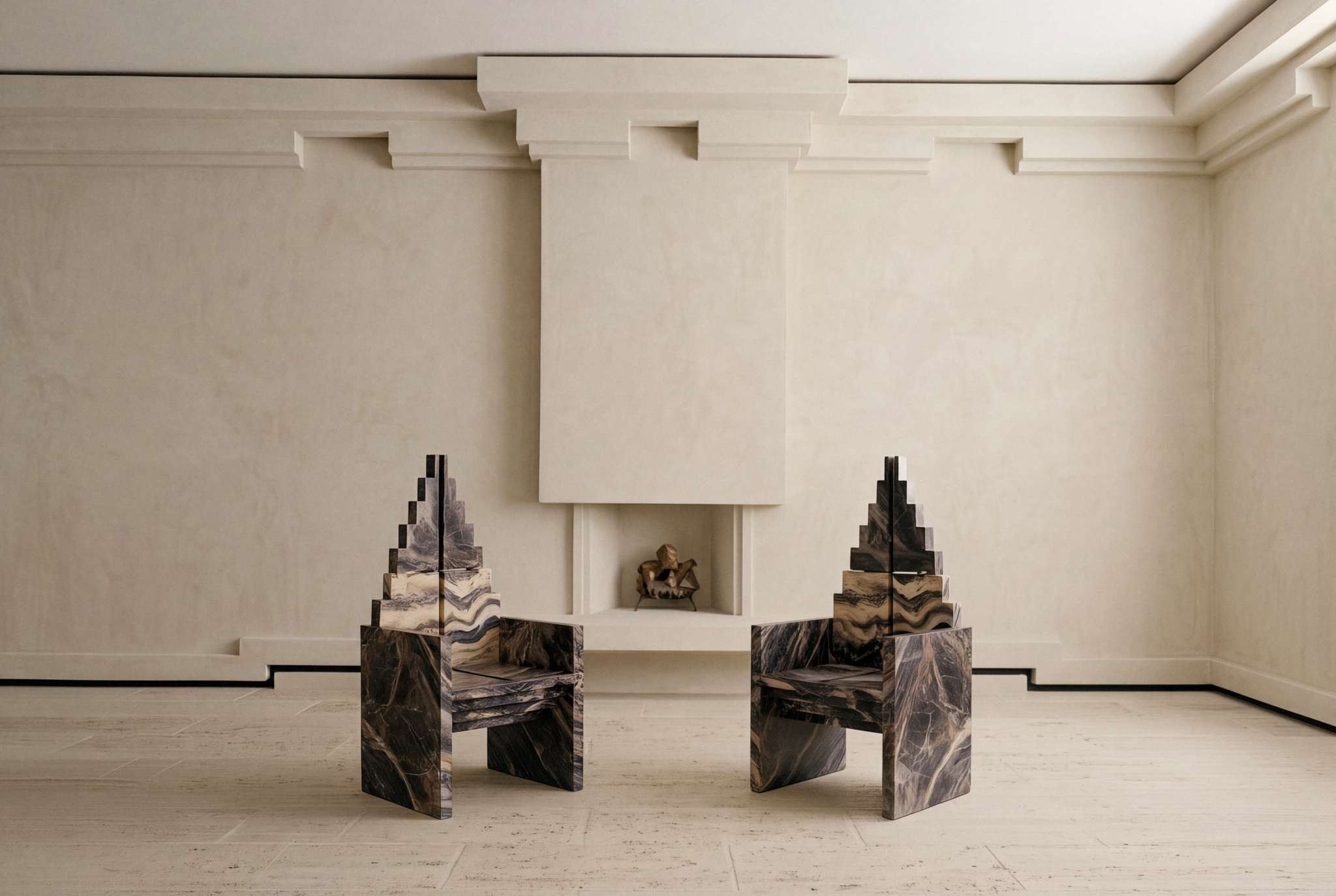
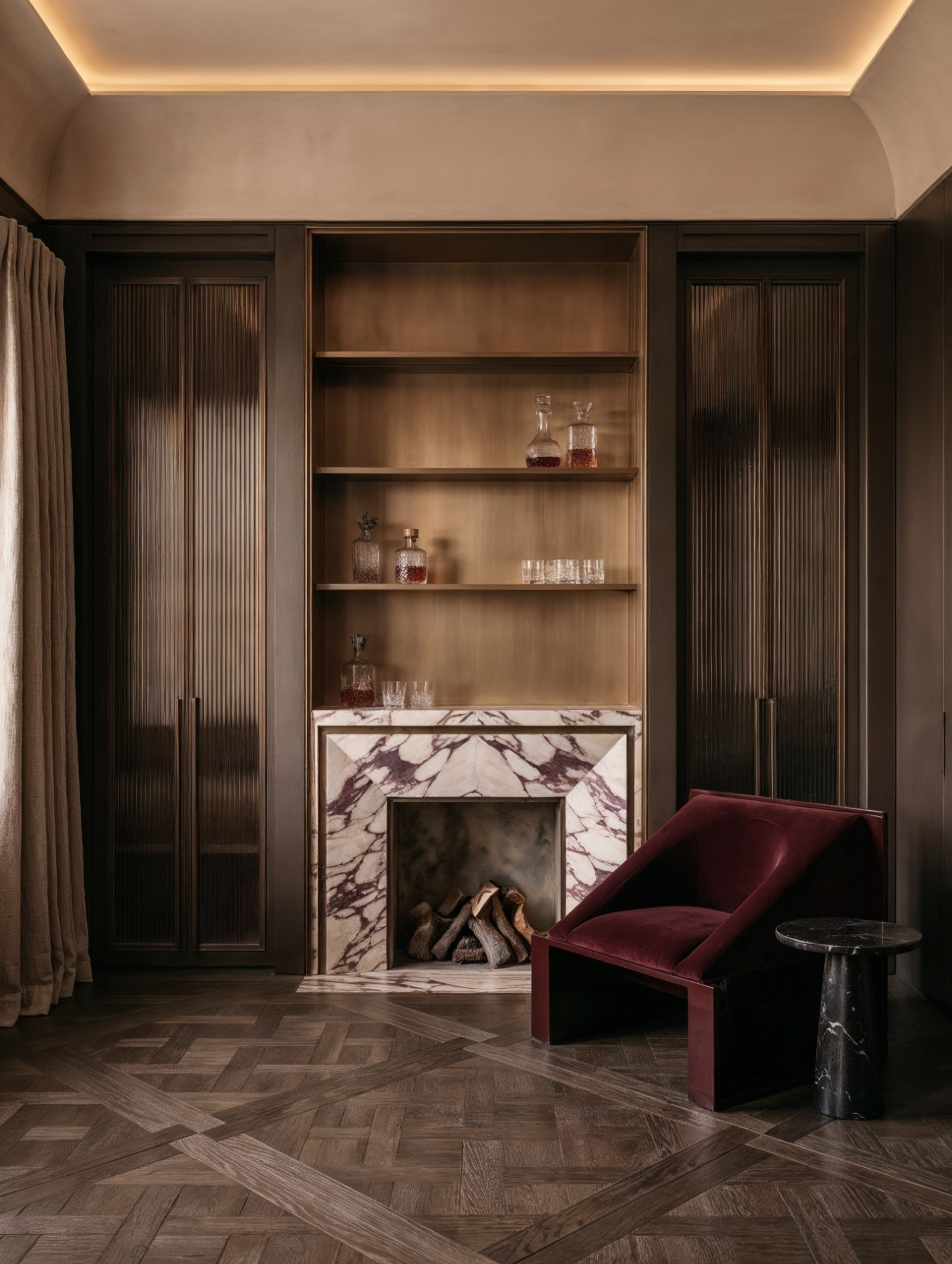
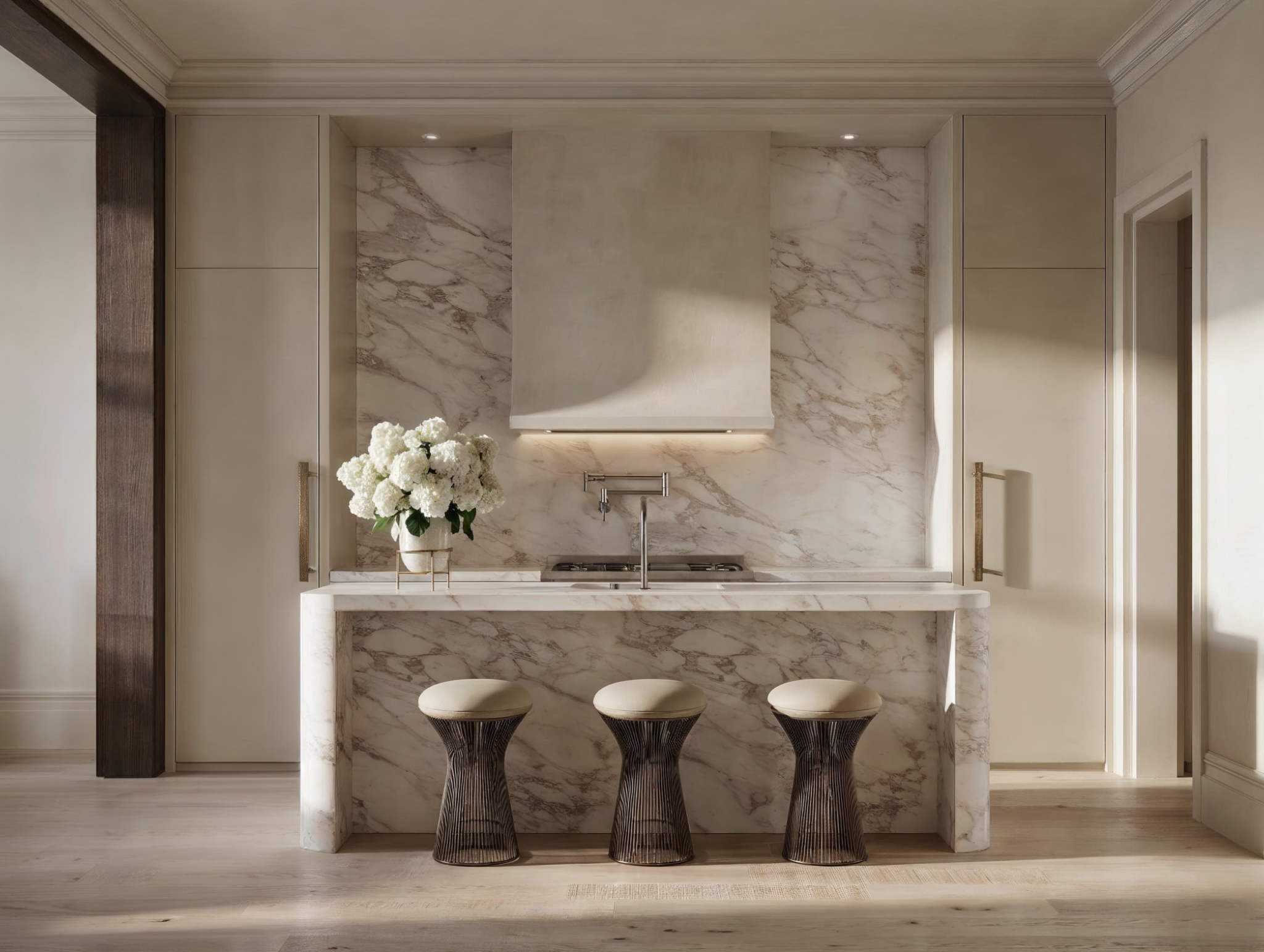
Taking its name from the Italian word rivo, meaning a small stream or watercourse, Villa Rivo is a conceptual residence and private thermal sanctuary rooted in the ancient Roman tradition of the thermae. Rather than treating bathing as a purely utilitarian routine, the architecture organises the lower ground level around the slow, restorative movement of water, light, and steam.
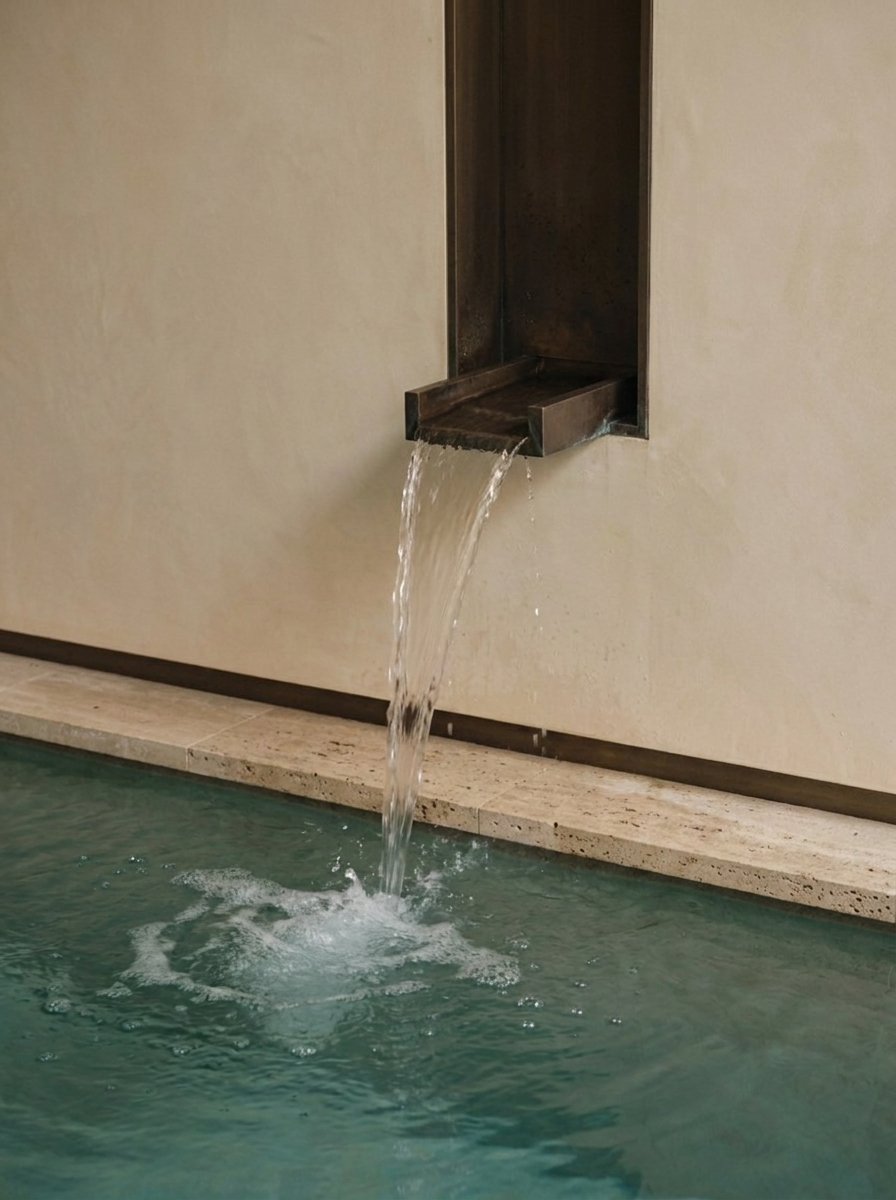
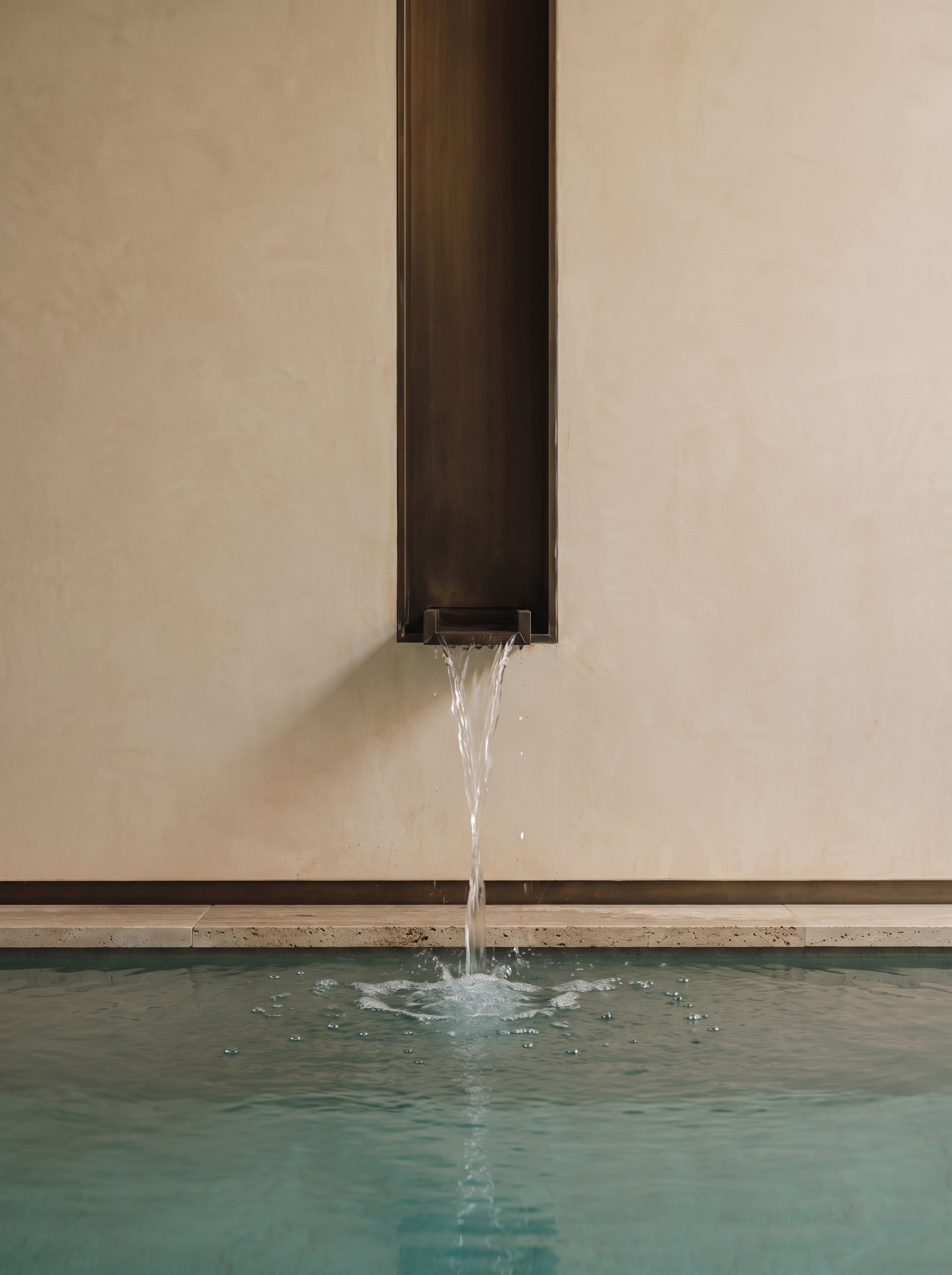
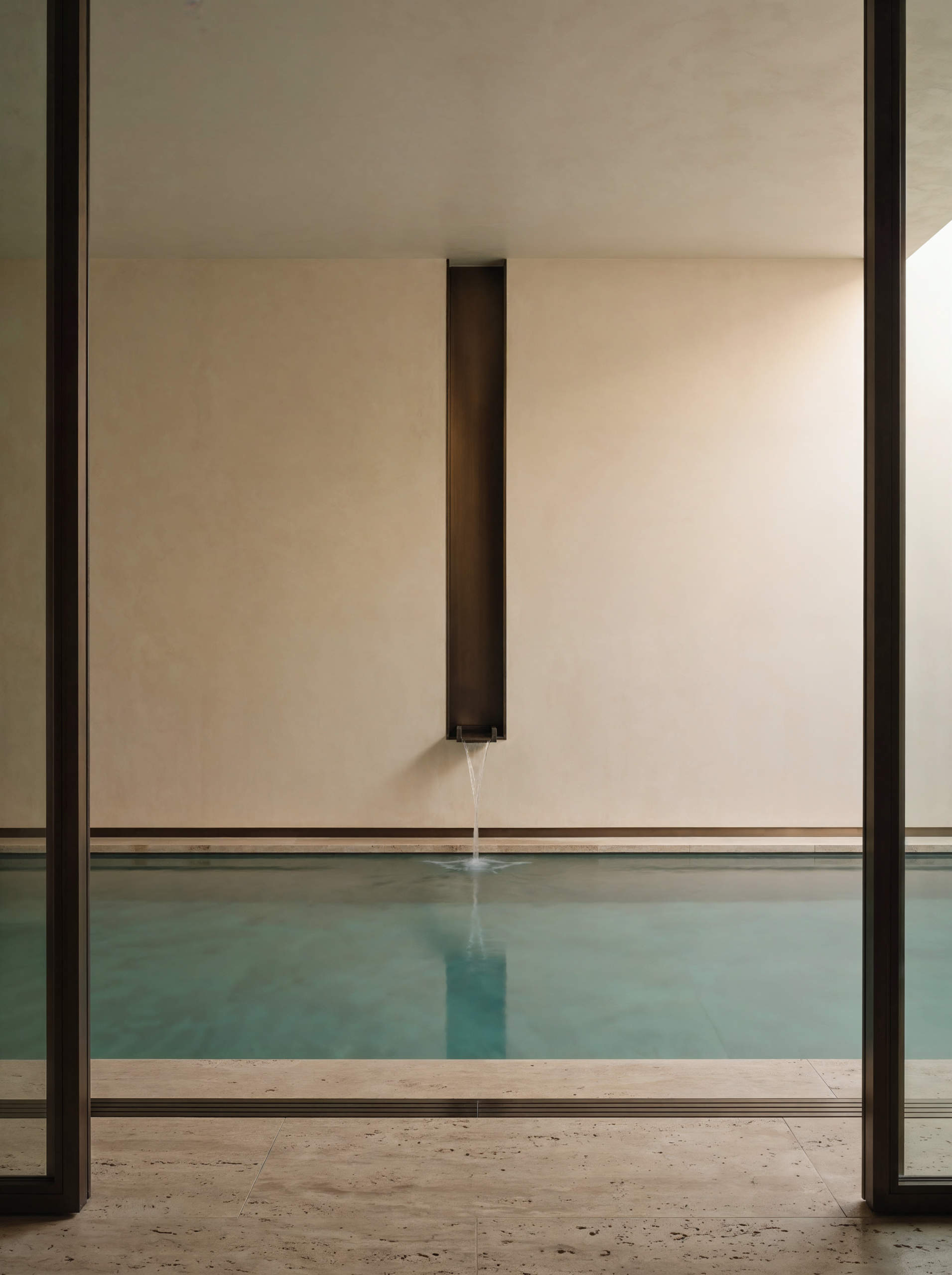
At the centre of the plan, a stillness settles over the subterranean pool hall. Uncut travertine slabs form the floor plane, interrupted only by a flush brass drainage channel that traces the perimeter of the basin. Set into the main elevation, a tall vertical recess lined in patinated bronze houses a cantilevered water spout. From here, a steady stream falls into the pale green water below, introducing a low, continuous acoustic rhythm that echoes softly against the lime-plastered walls.
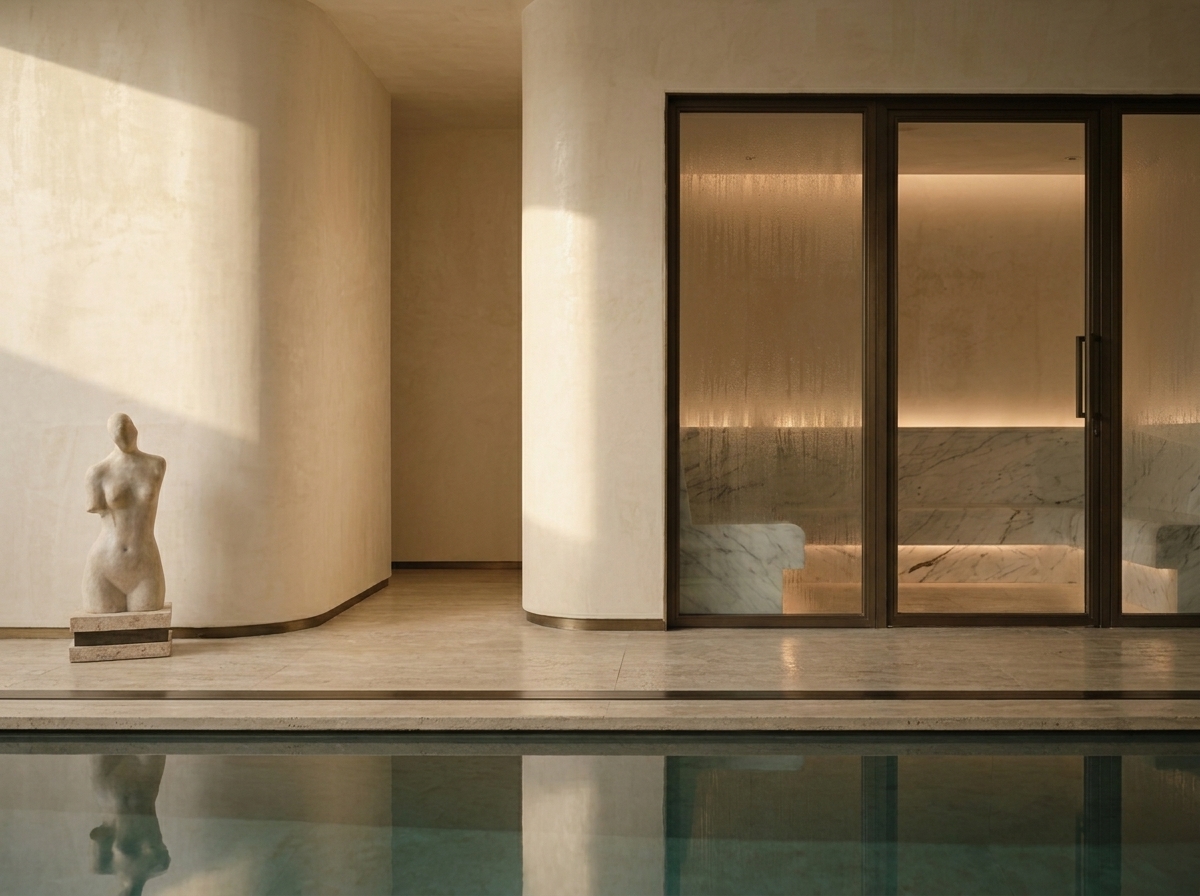
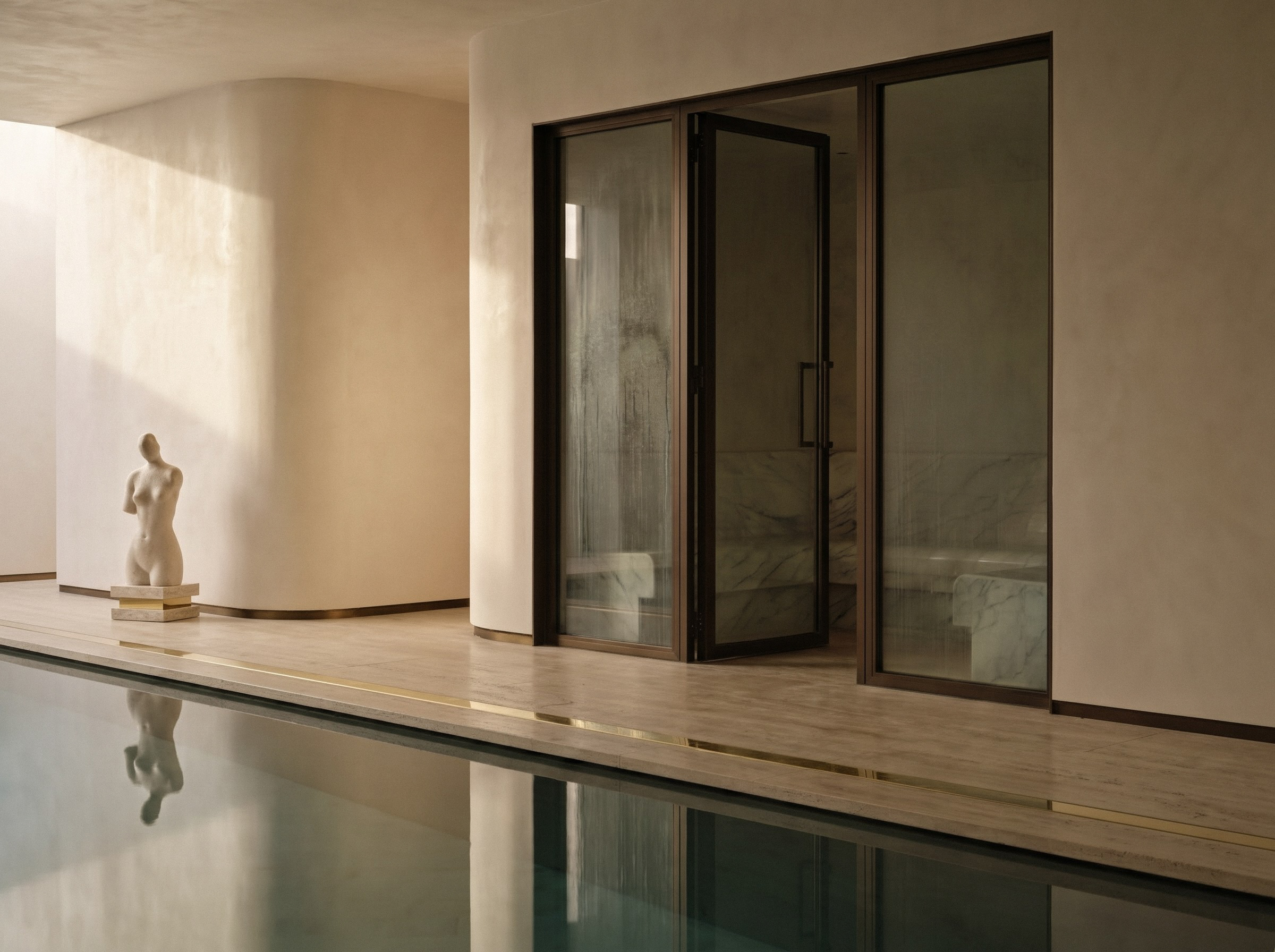
Moving along the water’s edge, the architecture softens from orthogonal lines into sweeping, radiused corners that guide circulation without hard thresholds. Slanted daylight filters in from an unseen aperture above, grazing a classical stone torso resting on a stepped travertine plinth before sliding across the plaster. Beyond a slender, bronze-framed glass partition, the hammam settles into a warm enclosure of veined marble benches and diffused, recessed illumination, visible through the shifting condensation on the glass.
In the adjoining dressing alcove, the material palette becomes more intimate and detailed. Curved plaster walls are articulated with fine vertical brass inlays that follow the radius of the room. Anchoring the elevation is a monolithic limestone basin with a stepped base, paired with wall-mounted bronze tapware and a geometric, bronze-framed mirror. Beside it, a suspended cast-glass pendant throws rippled, aquatic caustics across the plaster, echoing the movement of the thermal pool just beyond the threshold.